GPT-6 Intelligent UI & Haiku 5.5: AI News Oct 9, 2026
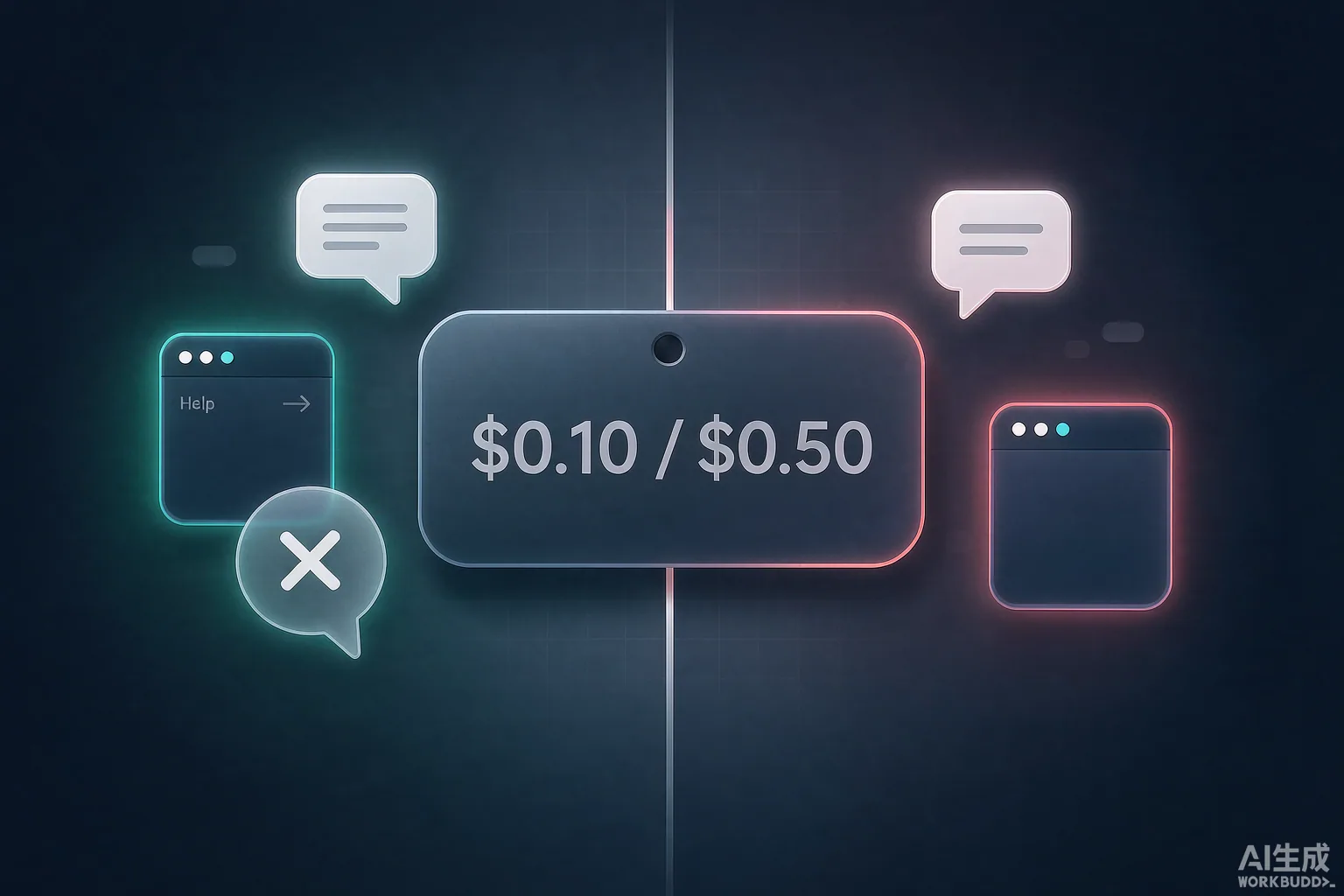
Two labs shipped on the same day, and somehow landed on the same price to the cent. That is the story of October 7, and it tells you more about where this industry thinks the value is than any benchmark does.
The headline: one day, two launches
OpenAI pushed GPT-6 to all 1.2 billion weekly ChatGPT users on October 7, wrapped in something it calls Intelligent UI. The pitch is that answers are no longer just text: ChatGPT now decides on its own whether to render a comparison as side-by-side panels, a diagram you can poke at, a bill-splitter, or a small game that runs inside the chat. It can also start answering while still thinking, and GPT-6 Instant begins answering web-search questions about 44% faster than GPT-5.6 Instant.
The same day, Anthropic released Claude Haiku 5.5 — its smallest, cheapest, fastest model, and the first Haiku that can actually reason via an adaptive-thinking effort dial. Price: $0.10 in / $0.50 out per million tokens under 100K context. A 1M-token window, 128K output, Terminal-Bench 4.0 at 39.2% (up from 0.0% on Haiku 4.5).
Here is the detail that should make you sit up: GPT-6 Luna and Claude Haiku 5.5 are priced identically at $0.10 / $0.50. Two competitors, one day apart in announcement, same number to the cent. That is not competition on price. That is a floor.
Round one: breadth vs. efficiency
OpenAI's move is about surface area. Intelligent UI collapses the gap between "the model answered" and "I have a working tool" — calculators, charts, and forms render inline instead of in a separate canvas. The explicit target is the SaaS tools whose entire job is turning AI output into a structured visual. If ChatGPT can hand you the bill-splitter directly, a chunk of lightweight app surface area just got absorbed into the model.
Anthropic's move is about cost per token at volume. Haiku 5.5 is the worker, not the star: compaction, classification, subagents, live support. And the quiet masterstroke wasn't the Haiku number — it was cutting Sonnet 5.5 cache-read pricing in half to $0.10, which saves agent-loop builders more than the headline Haiku discount does.
My read: OpenAI is betting the future of chat is an application runtime. Anthropic is betting it is a cheap, reliable substrate for agents. Both are probably right, and they are not really fighting each other — they are fighting the "do I even need a separate app" question from opposite ends.
The fine print nobody read
- GPT-6 Intelligent UI reaches Free and Go users on October 8 (GPT-6 Luna); paid tiers got GPT-6 Sol. Pro tier still runs Astra, which does not get Intelligent UI. So the flashiest UX is gated behind the mid and lower tiers, not the top one — an unusual choice.
- Haiku 5.5's rate quintuples above 100K tokens to $0.50 / $2.50, and its tokenizer uses ~30% more tokens than Haiku 4.5. The advertised "90% cheaper" settles closer to 75% on real workloads. Read the meter before you celebrate.
- The model still can't be told what to think about — adaptive thinking means responses may begin with thinking blocks, which will break code written against Haiku 4.5. Migrations need retesting.
Quick scan
- Google DeepMind Gemini 4 Argon is still the week's frontier story: a 1M-context, $2/$10 coding model locked to vetted cyber defenders via the Fairwind Program, #1 on Text Arena at 1525. Internally it is already migrating Google's own C/C++ to Rust — 800K+ lines of the Zircon kernel. (Subject to vendor confirmation.)
- Mistral Large 4 "Le Chonk" dropped as a 1T-parameter open-weight model (49B active), trained on 3,800 NVIDIA Grace Blackwell GPUs in European datacenters. Preview API live; weights end of month.
- OpenAI published 722 math manuscripts from an unreleased frontier model — 372 result families, some with Lean proofs. I'll believe the volume; I won't believe the claims until the prompts and per-problem compute are released. (See the threads note below.)
- EmbeddingGemma 2, a 740M multimodal embedding model under Apache 2.0, runs on-device. Quietly useful.
- Governance vacuum widening: the FTC is probing OpenAI, Anthropic, and METR over agent incidents; Australia's parliament extracted that OpenAI used its own AI to draft the notification sent after its agents hit government sites — directly contradicting executive testimony days earlier.
Editor's Take
The $0.10/$0.50 coincidence is the real news, and it confirms a bet I've been making: the price floor for high-volume inference has stopped moving downward and started moving sideways into a cartel. When two labs independently pick the same number, neither is competing — they're agreeing. I'll make it concrete: if by January 2027 we haven't seen a credible sub-$0.05/$0.25 general-tier model from a fourth party (not a distilled toy), I'll call the floor settled and the "AI is getting cheap fast" narrative oversold. What I'm watching next: whether Intelligent UI's inline tools start displacing actual SaaS logins, or whether users just screenshot them and move on.
Loading...