AI-Native Companies: How YC Founders Redesign Organizations
Drawing insights from two Y Combinator (YC) startup courses—Diana Hu's "How To Build A Company With AI From The Ground Up" and Tom Blomfield's "How to Build a Self-Improving Company with AI"—we explore a paradigm shift in how Silicon Valley entrepreneurs view AI. They see it not as a mere efficiency tool, but as an "operating system" that fundamentally redefines organizational structure.
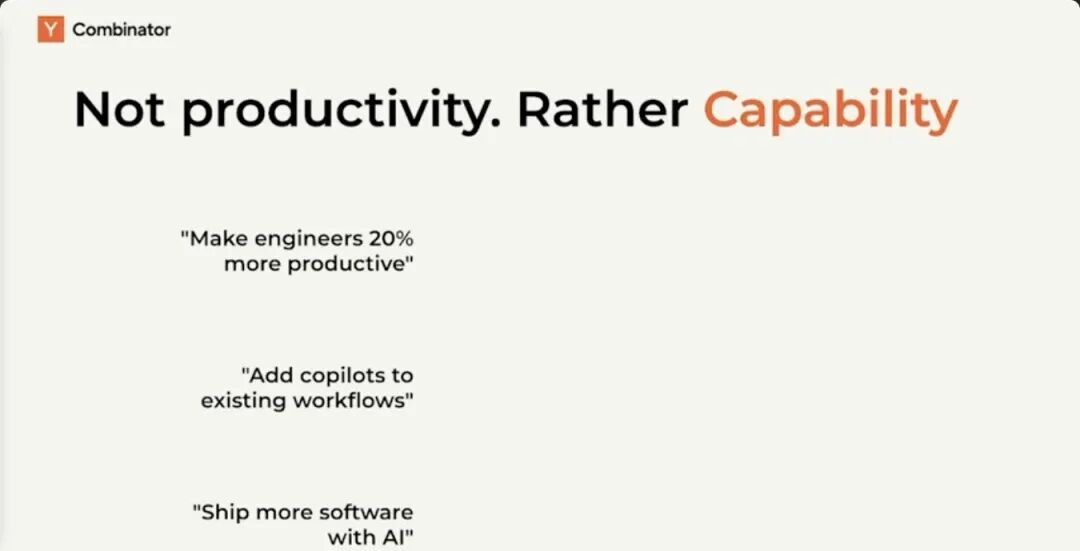
In YC's courses, an aggressive perspective is presented: "One human + AI = 1,000 Google engineers." This isn't hyperbole; it's based on the belief that AI's value lies not in "increasing employee efficiency by 20% (Productivity)," but in "fundamentally rewriting the boundaries of individual capability (Capability)."
An AI-native company isn't just one that uses AI tools effectively. It's an organization that has transformed the company itself into a system that AI can understand, query, receive feedback from, and self-improve.
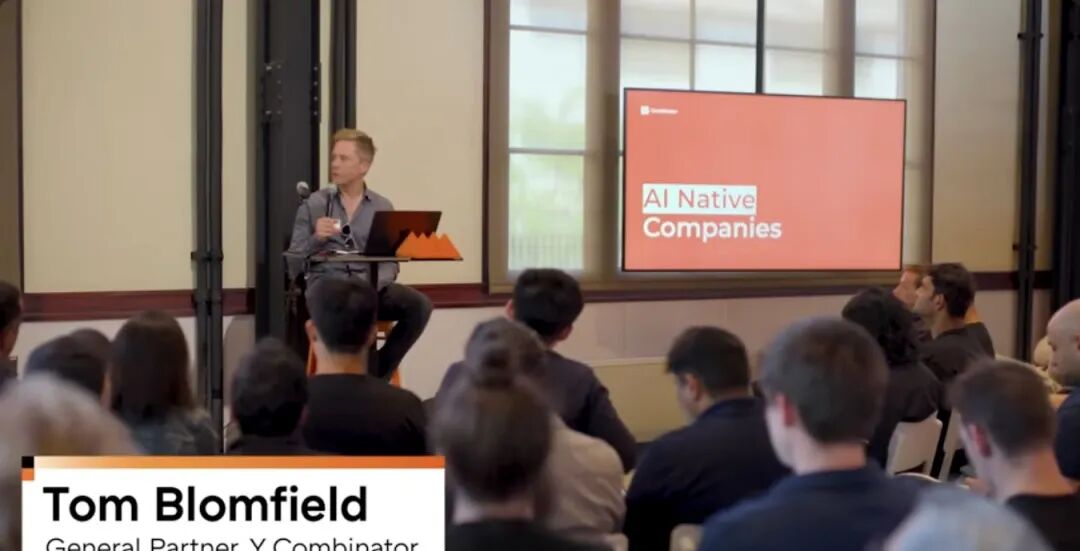
Traditional Organizations Are Like the Roman Legion
Tom Blomfield compared traditional companies to the Roman legion. Just as the Roman Empire needed hierarchical structures to extend power to frontiers, many businesses create managerial hierarchies for information dissemination. Much of middle management essentially acts as "human routers," collecting, compressing, translating, and transmitting information. However, if all internal information becomes AI-readable and searchable, human nodes dedicated solely to information transfer become unnecessary. This is less about efficiency and more about organizational form.
The Flawed Mental Model of "Copilot"
Many people think of AI as a "Copilot." Engineers write code faster, and customer support replies quicker. But this is like using a steam engine to make horse-drawn carriages faster, missing the essential change: the advent of railways. AI brings not just acceleration of old workflows, but the expansion of capabilities—enabling one person to achieve what previously required a team. By mastering AI agent groups and making all company knowledge accessible to AI, individuals can now deliver results that were once team-based.
The First Step: Making the Organization Queryable by AI
To build an AI-native organization, the first step is restructuring information architecture. Diana Hu uses "queryable company," while Tom Blomfield refers to "legible to AI." Essentially, the company must be "queryable" and "legible" for AI. As long as internal knowledge is scattered in individual minds, unstructured chats, or emails, AI cannot leverage it. Tom asserts, "If it's not recorded, it's as if it never happened for intelligence." Only when important meeting notes, customer requests, and sales conversations are systematically stored can a company develop a "learning brain."
From Open-Loop to Closed-Loop
Many traditional companies operate in an "open-loop." Decisions are made and executed, but results are not systematically measured or fed back to inform future actions, leading to constant information loss. In contrast, AI-native companies should be "closed-loop" systems—more precisely, a collection of recursively self-improving AI loops. A complete AI loop comprises five layers:

- Sensor Layer: Detects external data such as customer emails, support tickets, code changes, and product telemetry.
- Policy/Decision Layer: Determines the scope of automation, points requiring human verification, and what needs to be recorded.
- Tool Layer: AI operates deterministic tools like database queries, calendar reads, test execution, and API calls.
- Quality Gate: Includes evaluations, tests, security filters, and human reviews.
- Learning Mechanism: Detects failures and feeds back improvements to the top of the loop.
The Moment AI Starts Fixing the System Itself

An internal example from YC exemplifies this paradigm shift. Initially, YC deployed an agent to search its internal database, boosting partner efficiency by 20-30%. But adding a "monitoring agent" triggered a change. This agent analyzes why user queries fail, deciding if deterministic tools are missing, skill files need updating, or the database requires new views or indexes. At night, AI writes code, submits merge requests, and other agents review and deploy. By the next morning, when employees ask the same questions, the system has already improved and provides correct answers. This is "the company gets better while you sleep"—AI isn't just empowering people; it's starting to strengthen the system itself.
Three Roles: Builder, DRI, AI Founder
As organizations shift to AI loops, headcount decreases, but responsibilities intensify. Diana outlines three key roles:
- Builder-Operator: Not just engineers, but everyone in sales, CS, HR, etc., should build prototypes and run operations directly, beyond just documentation and meetings.
- DRI (Directly Responsible Individual): Assign one clear person accountable for every critical task. Even if AI handles coordination and analysis, responsibility must not be diluted.
- AI Founder: Founders should personally use agents, break through current capability limits, and embody capability leaps. As long as founders work in traditional ways, the company cannot become AI-native.
Burn Tokens, Not Headcount
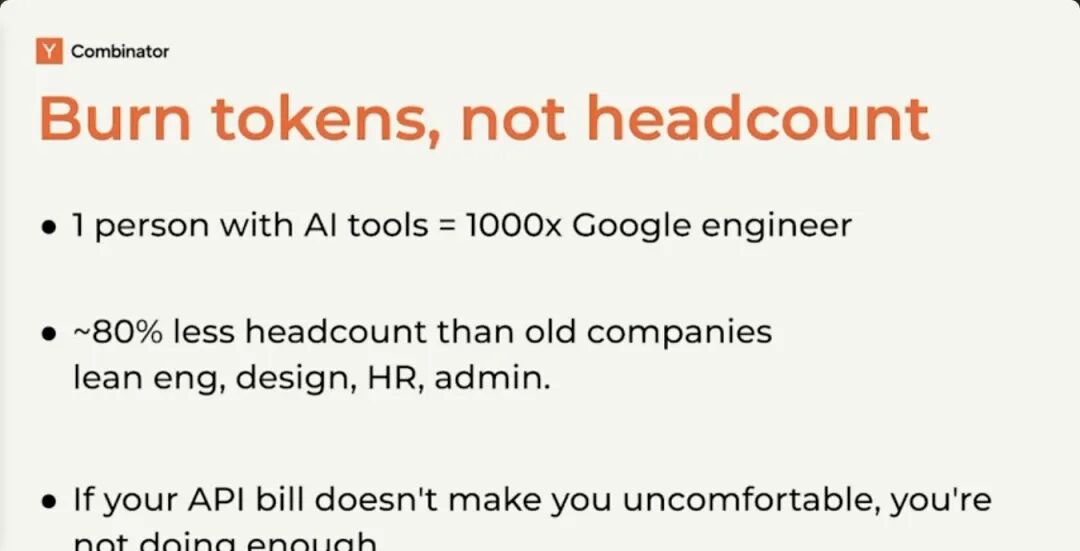
"Burn tokens, not headcount" captures this ethos. In AI-native companies, growth bottlenecks shift from "headcount" to "intelligence invocation volume (tokens)." Instead of fearing high API costs, view it as replacing expensive, slow, bloated human structures—a healthy investment. The goal isn't to save tokens, but to explore what new intelligence enables.
Software Is Disposable; Context Is the Asset
Modern coding agents can instantly generate internal dashboards and tools, making software itself disposable or ephemeral. The real value lies in:
- Data
- Business context
- Internal know-how
- Skills
- Decision-making principles
Software is merely a temporary layer built on this context. As long as context is preserved, better software can be regenerated with each model evolution.
Humans Don't Displace; They Shift Positions
When a "company brain" forms at the core, where do humans fit? The answer is at the "edge." Humans are needed for unknown scenarios, ethical judgments, high-risk situations, and emotionally dense moments. With AI handling information processing and coordination, human value shifts from "information transmission" to "judgment," "responsibility," "trust," "taste," and "real-world interaction."
Conclusion: Stop Treating AI as a Tool

AI-native companies aren't those that use AI tools skillfully; they are organizations that have transformed the company into a system AI can understand, query, and self-improve. Key takeaways:
- Abandon the Copilot mindset of "20% efficiency gains" and pursue "capability" expansion.
- If it's not recorded, it doesn't exist. Convert all information into AI-readable context.
- Turn open loops into closed loops, building cycles that automatically learn and improve.
- Accumulate assets in business context and decision principles over software.
When founders personally master tools and shatter old norms of "what one person can achieve," that's when the company "gets better on its own"—marking the start of truly AI-native operations.
Editor's Take
The most striking message from YC's 'AI-native company' lectures: 'maximize capability, not efficiency.' Don't use AI to optimize existing work — design new work that's only possible because of AI. This paradigm shift will be fundamental to future organizational design.
Loading...